
Talk to an Expert
Client Success Story · Sport & Leisure

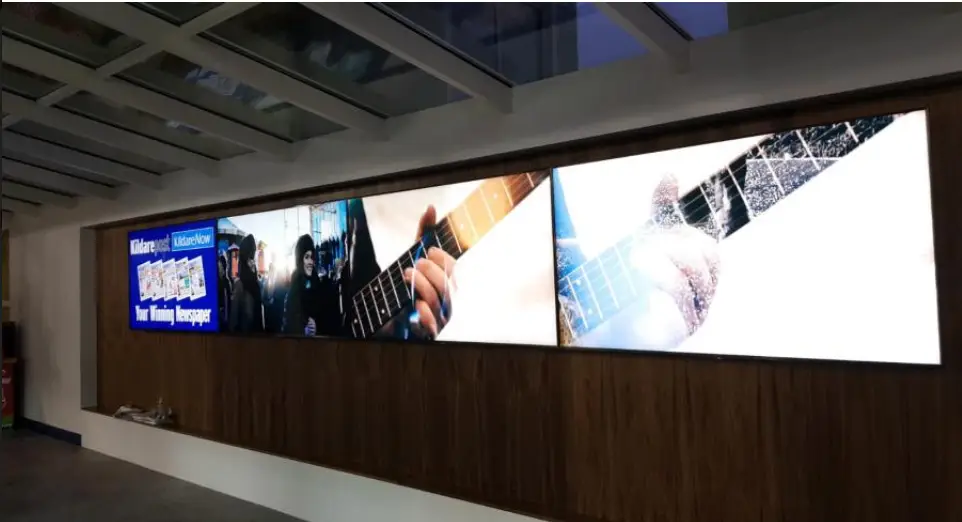
A 3×3 video wall and a 4K screen estate across the venue, tied together by an IP distribution system that puts any channel or any track camera on any screen — changed from an app between races. In since January 2018.
A venue where the crowd moves constantly and the thing they came to see lasts about two minutes at a time.
The installation
What went in, and what it has been doing since.
Panels in the video wall
Resolution on every screen
Years running
App controls every screen
The brief
A racecourse is not one room with one audience. It is a dozen rooms with a crowd that keeps moving between them.
People arrive, go to the ring, go to the bar, come back out for the off, then disappear inside again for forty minutes until the next one. At any given moment a good proportion of the paying crowd is nowhere near the rail — and the one thing they must not miss is the two minutes they actually came for.
Which makes the screens the difference between a venue where you can walk away from the track and one where you cannot. If the bar carries the race, people stay in the bar and spend there. If it does not, they file outside and the bar is empty for the best part of the afternoon.
On top of that, different parts of the venue want different things at the same time. The parade ring camera in one place, the finish in another, a meeting from another course somewhere else, a sponsor’s message in the hospitality suite. That is a distribution problem, not a screen problem.
What went in
Installed in January 2018 and extended since, all running on the same network.
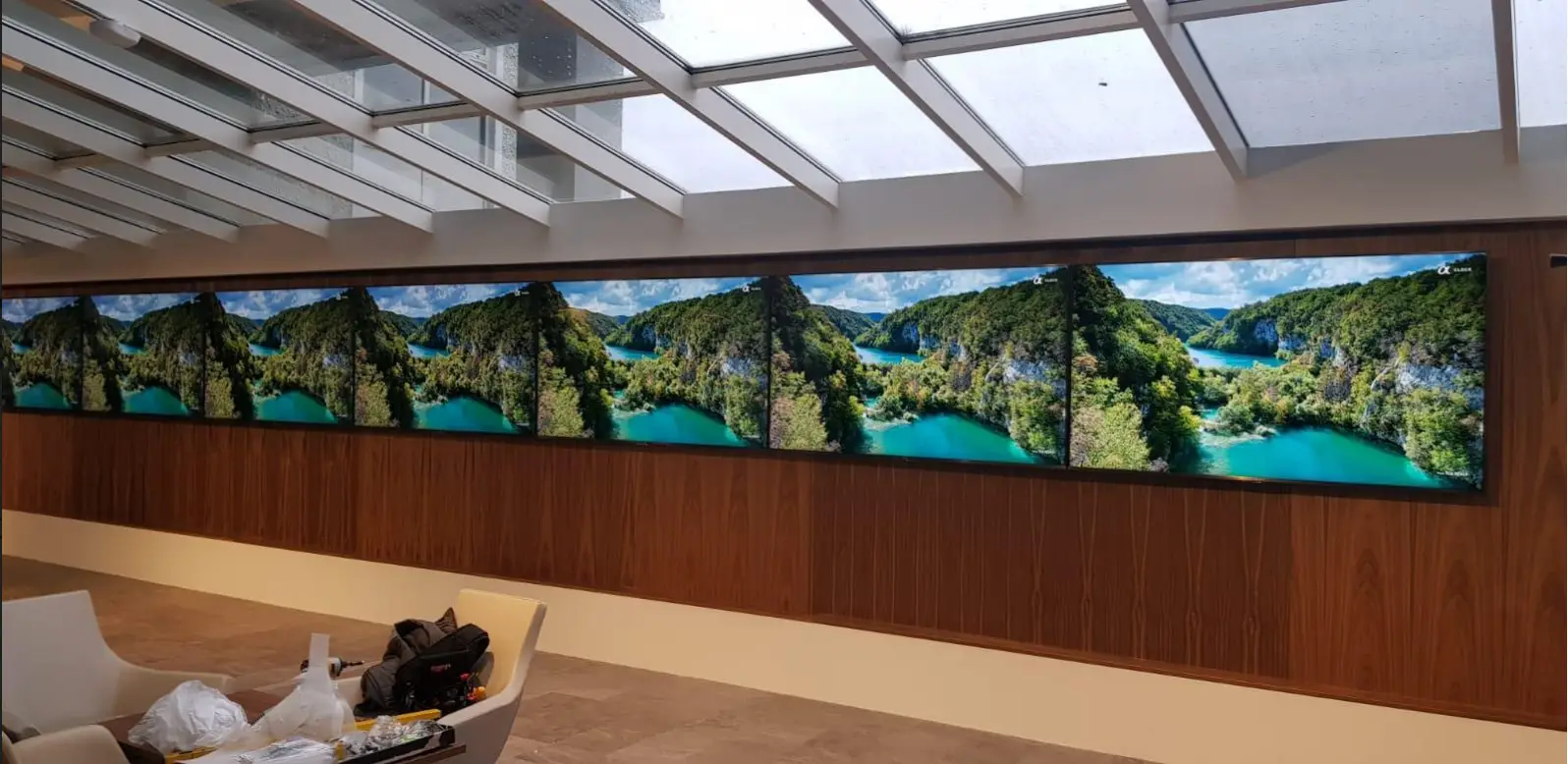
Nine panels as one picture, sized to carry a live race at a distance and to hold a room's attention when nothing is running.
49″ and 75″ screens through the venue, placed where people actually stand rather than where the cabling was easiest.
Any channel, camera or source routed to any screen over the network, controlled from an app or a PC.
Crisp sponsor and advertising content across the estate, turning the screens into inventory rather than only an expense.
The part that makes it work
The video wall gets the attention. The distribution system is what earns its place on a race day.
Everything runs over an HD IP distribution system, which means the screens are not hard-wired to a source. A member of staff with an app or a PC can put any channel, any track camera or any feed onto any screen in the building, and change it again ninety seconds later.
On a race day that is not a convenience, it is the whole operation. The parade ring goes up in the bar while horses are circling, the live race takes every screen at the off, results and the next card come up afterwards, and the hospitality suite runs something different from the public bar throughout. None of that needs a technician or a cable.
It also means the system was still useful five years after it went in, because adding a source or moving one is a configuration rather than an installation.
The detail
The specification, for anyone weighing up the same job in a venue of their own.
3×3, nine panels, one image. Narrow-bezel commercial panels aligned so the join does not fall across the part of the picture people are watching.
49″ and 75″ through the venue. Sized to the viewing distance in each room rather than to a single house standard.
Ultra-high definition on every display. It matters more than it sounds on a racecourse, where the useful detail is a number on a silk at three hundred metres.
Every screen networked, one locally hosted CMS. Content and configuration managed centrally rather than screen by screen.
High-definition IP routing. Any source to any screen, controlled from an app or a PC by the staff running the day.
High-definition advertising across the estate. Scheduled alongside the live content rather than fighting it for space.
On site
Photographs from around the venue.

A new revenue line
The advertising system is the part venue managers tend to ask about second and care about most.
A racecourse already sells sponsorship. What it usually cannot sell is sponsorship that moves, changes between races, appears in specific parts of the venue and can be reported on afterwards. A high-definition advertising system across a networked estate makes all of that saleable.
Race sponsors, hospitality partners, bar promotions and the venue’s own events all get inventory that did not exist before, scheduled centrally and running alongside the live pictures rather than interrupting them.
User-friendly and supported
A system only the installer understands is a system that stops being used.
Comprehensive end-user training means the people working a race day can drive the whole estate themselves — putting the ring on the bar screens, taking every screen to the live race, switching the suite to something else afterwards — without ringing anybody.
Behind that sits a long-term maintenance and warranty package. That is the reason a 2018 installation is still doing its job rather than sitting as a dark wall somebody stopped trusting.
The result
The measure of a venue installation is whether it is still being used the way it was designed to be used.
Since January 2018 the system has delivered the same thing every race day: the crowd can watch from wherever they are standing, the staff can move content around the building in seconds, and the screens carry commercial content that pays for part of the room.
It set a standard for digital display in Irish sport and entertainment venues, and it has kept working because the distribution system was specified to outlast the screens hanging off it.
“A short line from Naas Racecourse about the system or a race day using it.”
Name, role — Naas RacecourseMore like this
Same problem, different rooms.
Tell us how the building is used on an event day and where people actually go. You will get a screen plan and a distribution design together, because in a venue they are the same question.