
Talk to an Expert
Client Success Story · Event Production

Complete event production for the TRYKA fitness racing series across Dublin, London and Lisbon — over 250m² of fine-pitch LED, line-array audio, full lighting, trussing and staging, built from an empty hall in eighteen hours.
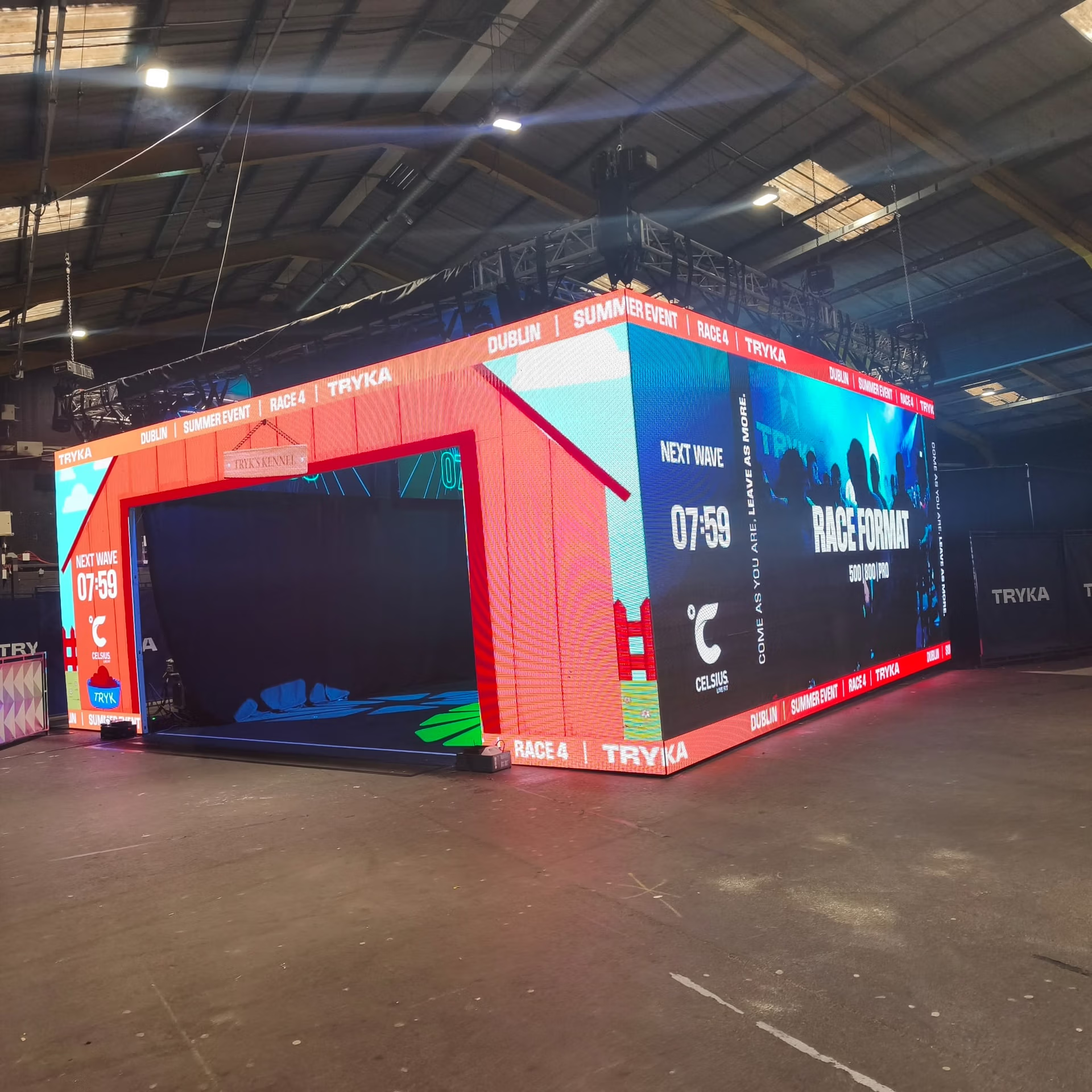
A competition series where the screens are not decoration — they are how the event is run.
The production
What travels, and how long there is to build it.
Square metres of fine-pitch LED
Hour build, empty hall to showtime
Cities in the series
Logistics streams coordinated
How we work
The technical package is the visible half. The other half is a crew who understand that a room full of competitors is not a room full of equipment.
Our AV crew work closely behind the scenes to keep people, technology and timing aligned. On an event like this that means the countdown is right, the call comes when it should, the music drops on the beat the organisers wanted and nobody standing on the start line is looking at a blank screen wondering whether something has gone wrong.
Done properly it is invisible. The experience feels calm, considered and connected from start to finish, and nobody in the hall has any idea how much had to happen for it to feel that way.
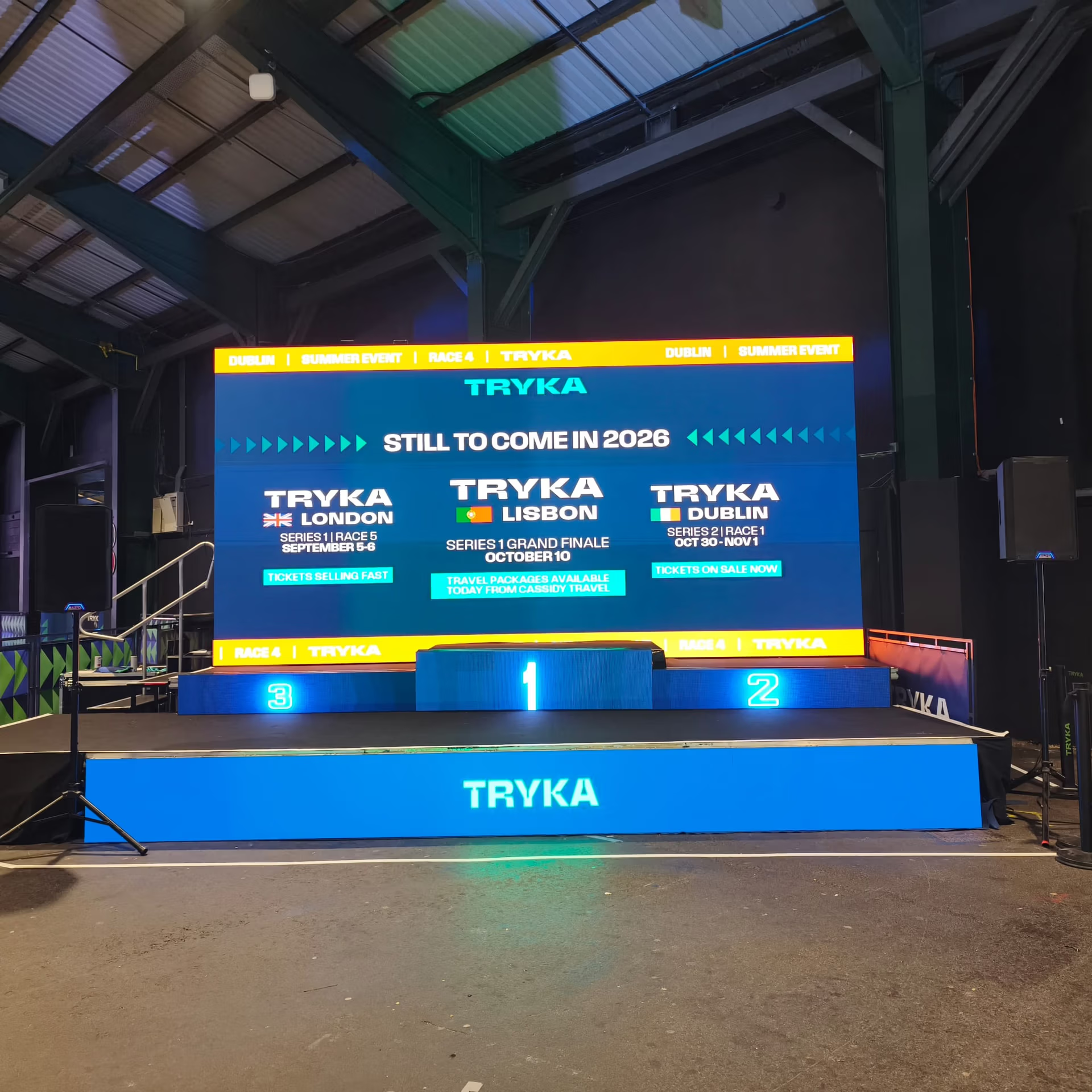
The part that makes it different
At most events the LED shows content. Here it carries the competition itself.
Wave countdowns tick down to the start on the gate. Athlete names, nationalities and finish times appear on the leaderboard as they cross. Positions reorder live. The heat currently running is on the wall the crowd is standing at, and the next wave knows exactly when it is being called because the screen is telling them.
That is a different technical problem to playing a show file. It means live data has to reach the screens reliably, the moment it changes, in a hall where a delay of a few seconds is the difference between a leaderboard and an argument. Video processing and signal distribution are doing real work rather than moving a loop around.
It also means there is no recovering from a failure by skipping to the next slide. If the screens stop, the event stops.
The package
The same production standard regardless of the hall or the city.
Over 250m² carrying live competition data, event visuals, branding and sponsor content, with the video processing and signal distribution behind it.
Martin Audio line-array with wireless microphone systems — specified for a large hall full of people rather than an empty one.
Full event lighting, designed to work with the LED rather than compete with it for the same room.
Trussing, staging platforms, rigging and power distribution, planned to each venue’s own limits.
Eighteen hours
With this much LED, audio, lighting, trussing and infrastructure to install, every hour of the build matters.
An eighteen-hour build is not achieved by working faster on the day. It is achieved weeks earlier, on paper. Equipment preparation, truck loading order, crew allocation, power, signal distribution, LED configuration and build sequencing are all settled before the first vehicle moves.
By the time the trucks arrive the decisions have been made. The crew are not working out what happens next; they are working through a sequence designed so nothing waits on anything else. Rigging goes up while LED is being unloaded, audio flies while the floor is still being marked, and the show file is tested before the last case is empty.
That is what makes a tight window survivable rather than fraught, and it is why the venue is built, tested and ready before doors.
The series
What changes between stops is the plan for getting it in. Not what the athletes and the crowd end up looking at.
When a production moves, the temptation is to let the standard drift with it — a slightly smaller screen here, a compromise on the audio there, because this venue is awkward. Every one of those compromises is invisible to the crew and obvious to the room.
The system is specified so the production standard is held constant across the series. The competitor racing the Grand Finale gets the same event as the one who raced the opening round.
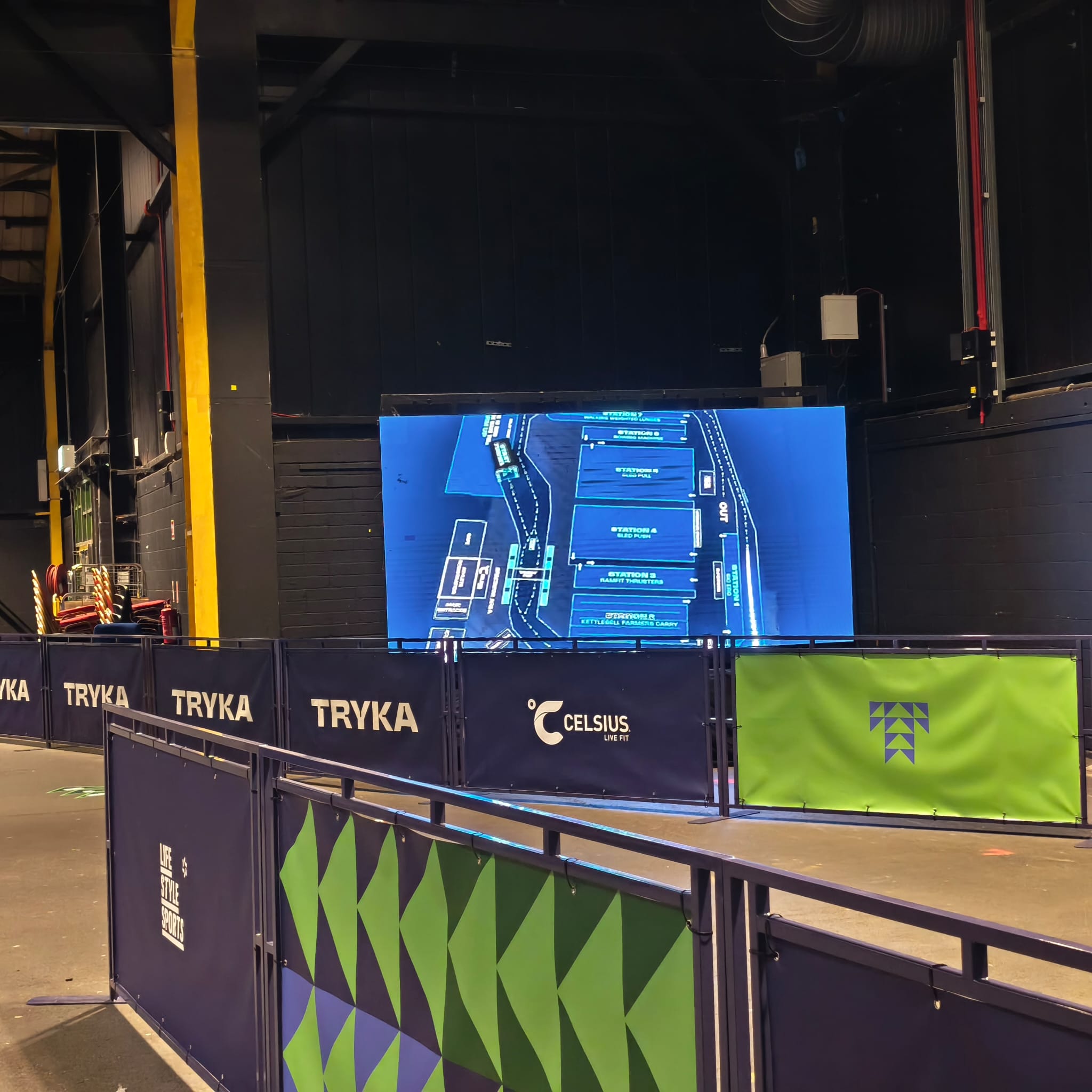
From the floor
Shot on the day, at the venues.
Getting it there
Multiple truckloads of LED, audio, lighting, trussing, power and production equipment travel to every event.
Articulated lorries and production vehicles. Coordinated as part of the production plan rather than booked once the kit list is finished.
Crossings planned into the schedule. A sailing or a freight slot is a fixed point the whole build sequence works backwards from.
Load order is production planning. What comes off the truck first is what goes up first, decided long before loading begins.
Loading bays and access requirements. Every hall is different, and the build plan is written against the one you are actually going into.
Delivery and collection windows. Large venues run to timed slots, and missing one costs a great deal more than an hour.
Scheduling, load-in and load-out order. Including overnight and multi-location moves, so the next venue is not waiting on the last.
Complete event production
And we get it to the next venue.
“A short line from TRYKA about the production or the turnarounds.”
Name, role — TRYKAMore like this
Same crew, different halls.
Tell us the venues, the dates and how long you get in each one. You will get a technical package and a logistics plan together, because at this scale they are the same conversation.


