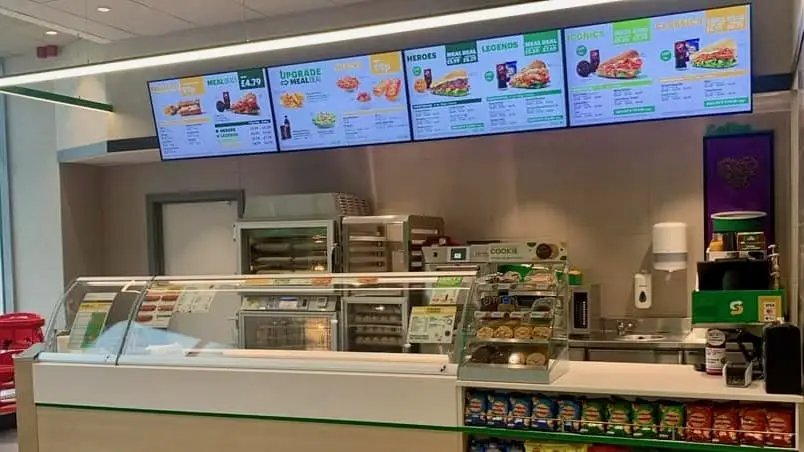
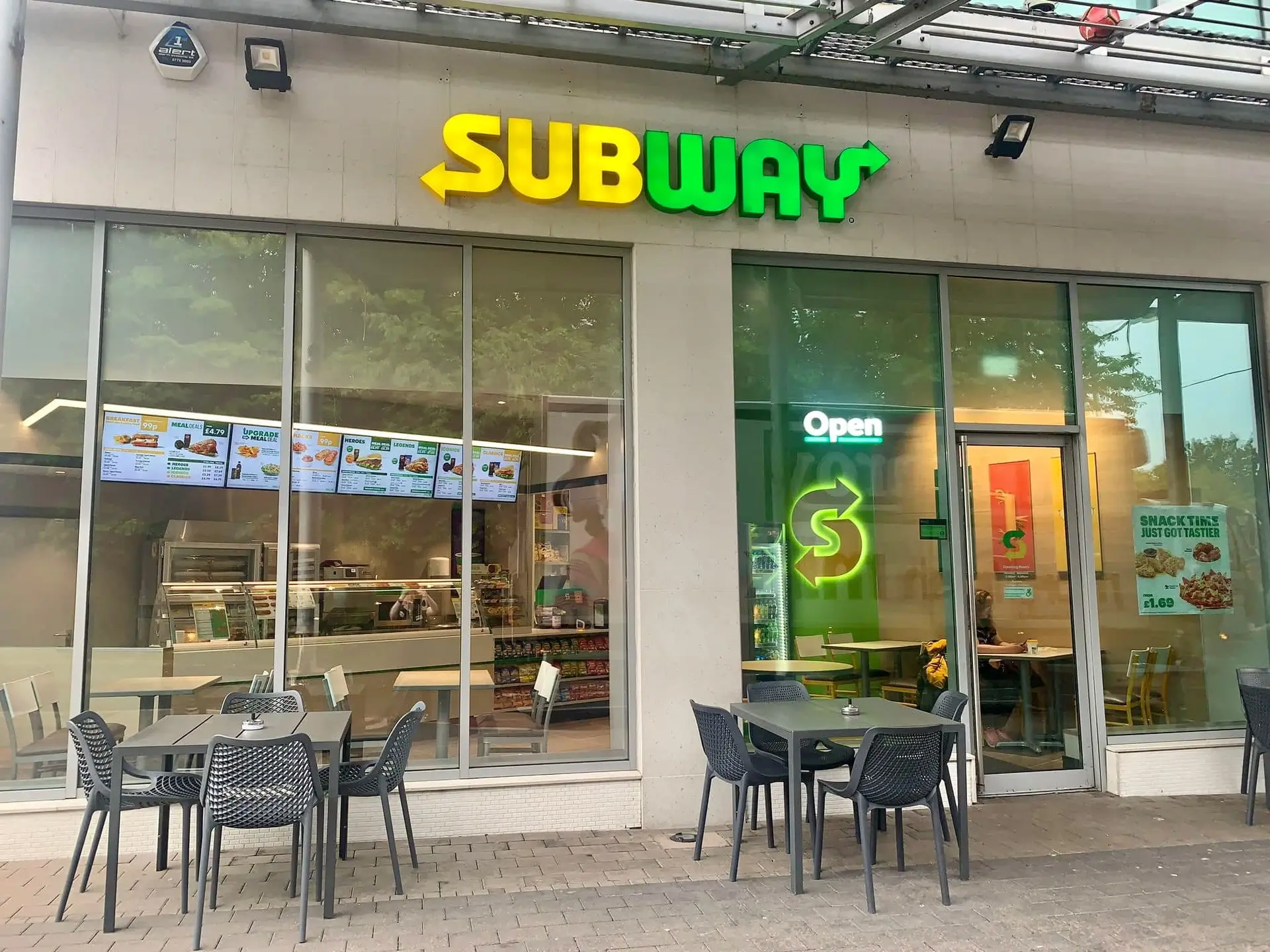
Digital menu boards installed, maintained and supported across Subway stores in Ireland and Northern Ireland — as part of the global implementation team. Engineers in six cities, spare hardware held locally, and a support line that does not close.
Screen and location figures are the totals the programme reaches at completion.
0+
Screens at completion
0+
Locations, Ireland and NI
0
Cities with engineers
0
Hour support, seven days
Why it matters
A dark menu board is a closed till
In a quick service restaurant the menu board is not decoration. It is the thing the queue is reading while it decides.
When a board goes down in a QSR it goes down at the worst possible moment, because the busiest hour is the hour the hardware is working hardest. The queue slows. Staff start reading the menu out. Upsells stop happening because nobody can see the meal deal. Every minute of that is measurable revenue.
That is why the specification for this kind of estate is not really about the screens. Any competent supplier can hang a screen. The question that matters is what happens on the Friday afternoon a board fails in a store two hundred kilometres from anywhere — how quickly somebody is standing in front of it, and whether they have the part in the van.
Subway needed a partner who had answered that question before it was asked.
What we do
Deploy, maintain, support
Three jobs, one partner, for the life of the estate rather than the length of the installation.
Nationwide deployment
Digital menu boards installed across Subway locations in Ireland and Northern Ireland, delivered as part of the global implementation team.
Maintenance and servicing
Ongoing servicing of the network, remote updates, scheduled preventative visits and system checks that catch faults before they become outages.
Dedicated support
A named support provision rather than a general helpdesk, staffed around the clock, with priority handling for anything that takes a board dark.
Nationwide engineering coverage
Local engineers. Local stock.
Engineers based in six cities across the island, each holding buffer stock so a failed unit is replaced from a van rather than ordered from a warehouse.
DublinEngineer base
DundalkEngineer base
GalwayEngineer base
LimerickEngineer base
BelfastEngineer base
CorkEngineer base
This is the part of the arrangement that is genuinely difficult to copy. Response times mean nothing without somebody within driving distance, and driving distance means nothing without the right part already in the vehicle. Holding stock in six places costs money and is the reason a fault becomes a call-out rather than a lead time.
Fast on-site response
What actually happens when a board fails
The commitments behind the estate, set out plainly.
Engineer response
Within 24 to 48 hours, nationwide. North or south, city or town, the response window is the same because the engineer network is spread to make it the same.
Priority for outages
Critical faults jump the queue. A board that is dark during trading is handled differently to a scheduled adjustment, and is escalated the moment it is reported.
Local buffer stock
Spares in the van, not on order. Each engineer base holds replacement hardware, so a failed unit is swapped on the visit instead of waiting on a delivery.
24/7 support
Online and by phone, every day. Support does not keep office hours, because neither does a Subway store.
Continuous monitoring
Automatic alerts to our support team. Screens are monitored, so in many cases we know a board is down before the store has had time to ring anybody.
Preventative maintenance
Scheduled visits and remote checks. Regular updates and system checks catch degradation early, which is how you stop failures rather than react to them.
Business critical
Keeping your menus live
Everything above exists for one reason: the boards are tied directly to what the store takes that day.
Always onSupport you can reach at any hour, any day
On the groundEngineers within reach, with the parts already with them
Ahead of the faultMonitoring and preventative visits catch it early
Across the islandThe same commitment in Cork as in Belfast
On site
Boards in the stores
Photographs from installations across the estate.
Proven experience
We know what a lunch rush does to a screen
Quick service is a harder environment than it looks from outside.
Heat above a hot line, grease in the air, a board that never switches off, and a fit-out where the only cable route is the one that already exists. Panels specified for an office reception do not last in that room, and mounting that was fine in a showroom is not fine above a toaster.
Knowing that in advance is the difference between an estate that runs quietly for years and one that generates a call-out every fortnight.
Menu boards installed across Subway locations in Ireland
Ongoing maintenance and servicing of the network
Dedicated support provision rather than a shared queue
Deep understanding of QSR environments where menus are critical
Part of the global implementation team for the brand
The result
Engineers on the ground, ready to respond
By the time the programme completes it will cover more than 800 screens across over 200 locations in Ireland and Northern Ireland.
A rollout at that scale is only as good as the year after it finishes. The engineer network, the local stock and the round-the-clock support are what turn a large installation into an estate that stays live — and they are the reason the relationship has kept growing rather than ending at handover.
“A short line from Subway about the response times or the support.”
Name, role — Subway
More like this
Other menu board estates
Same problem, different counters.
On site
Photographs from the job
The installs and the finished screens, as they were.
Keeping your menus live. Keeping your business moving.
If you run more than a handful of sites, the question is not who can install the screens. It is who will still be answering the phone in three years. Tell us how many sites you have and we will tell you exactly what our cover looks like where they are.